 For Client Support:


 Blog Details
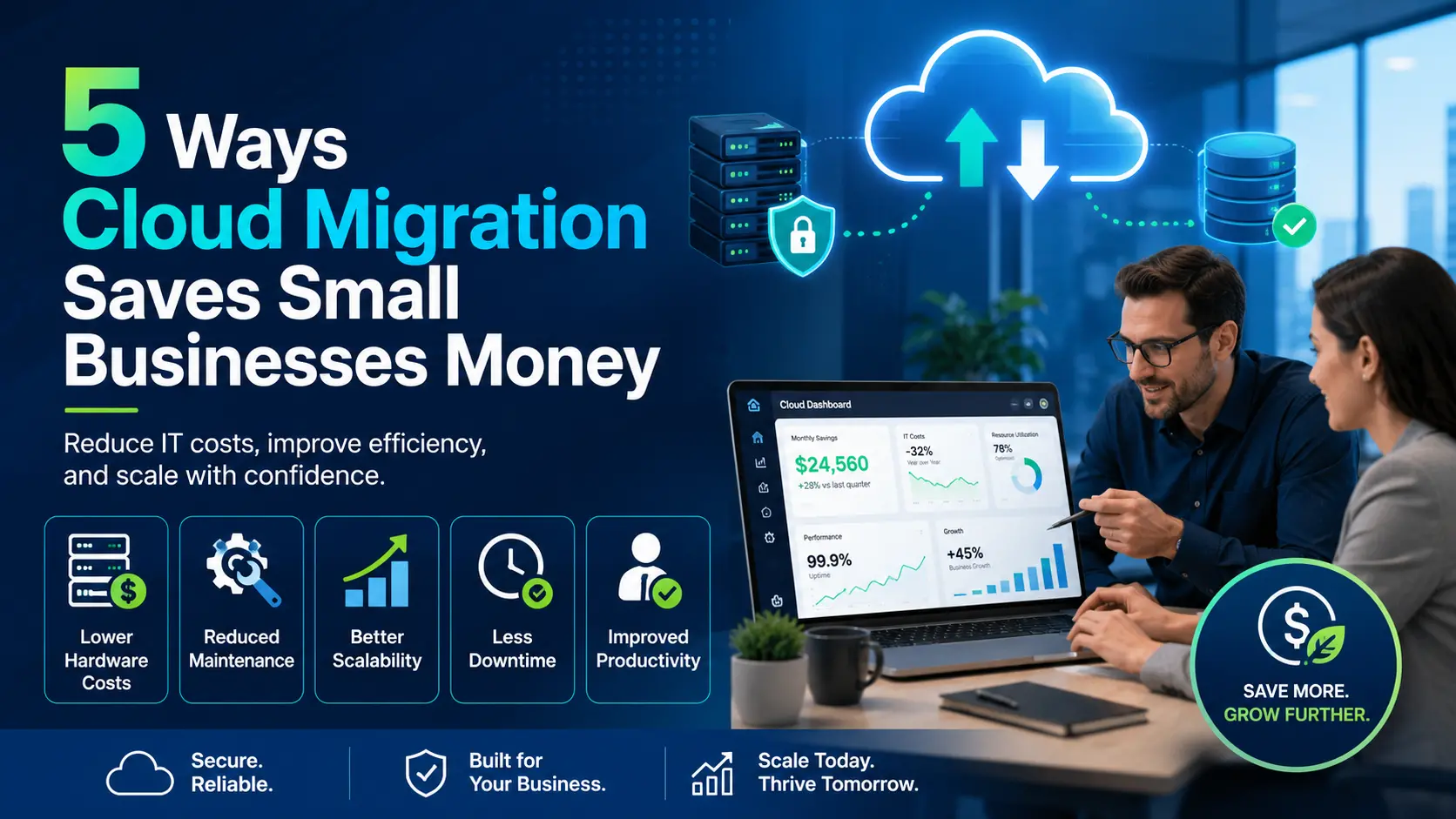

5 Ways Cloud Migration Saves Small Businesses Money
Introduction
Running a small business today means balancing growth, technology, customer expectations, security, and cost control. Many businesses know they need better digital systems, but they worry that upgrading their technology will be too expensive. The truth is that cloud migration can often help small businesses save money while improving performance, flexibility, and long-term reliability.
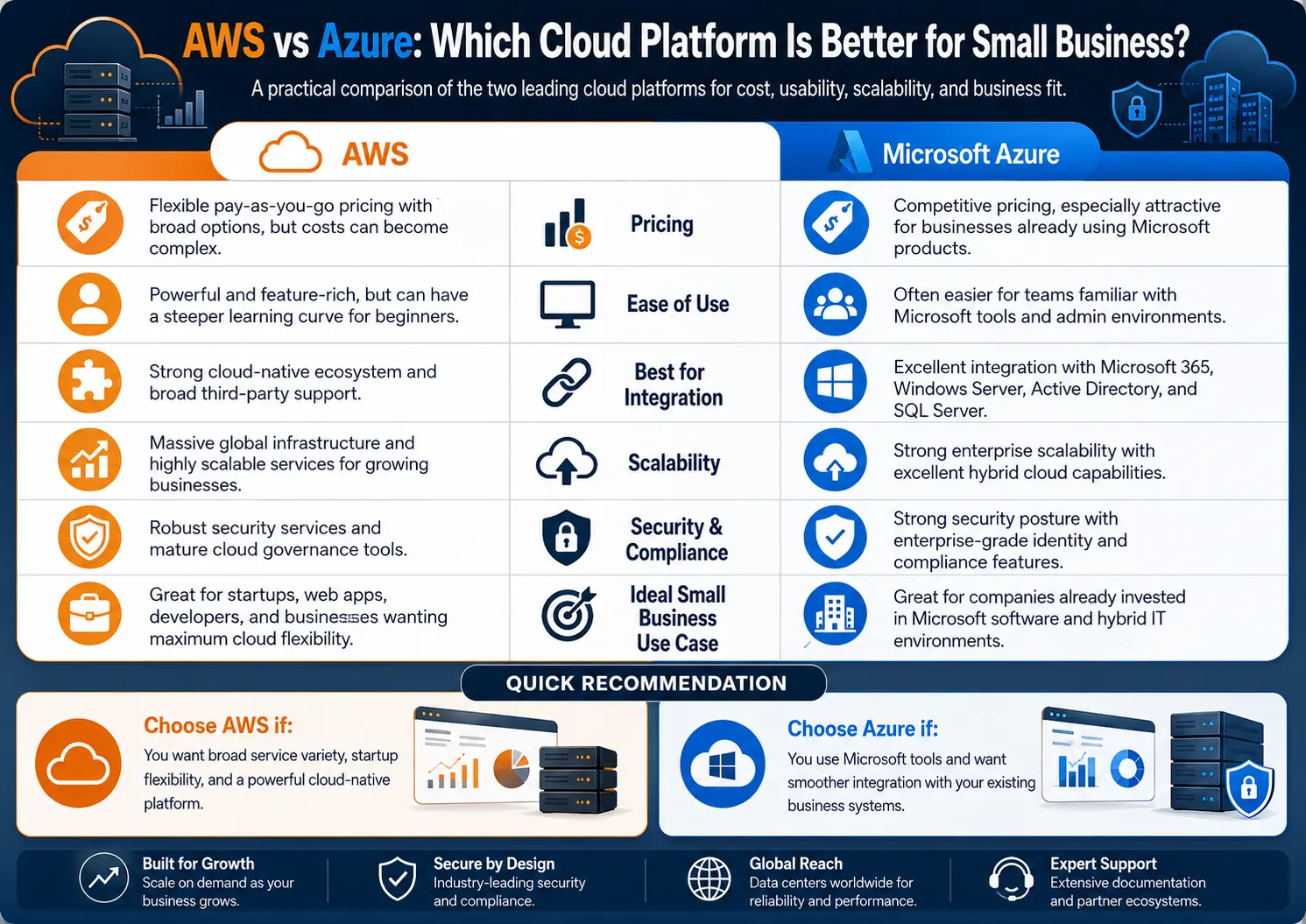
Cloud migration is the process of moving websites, applications, databases, files, or business systems from outdated hosting, local computers, or physical servers into a modern cloud environment. This can include platforms such as AWS, Microsoft Azure, Google Cloud, IBM Cloud, managed cloud hosting, or hybrid cloud solutions.
For small businesses, the cloud is not just about technology. It is about reducing waste, avoiding downtime, improving customer experience, and creating a foundation that can grow with the business.
1. Cloud Migration Reduces Hardware and Maintenance Costs
Traditional IT systems often require businesses to buy, maintain, upgrade, and replace physical hardware. Servers, storage devices, networking equipment, backup drives, and on-site systems can become expensive quickly. Even when a business uses basic hosting, it may still deal with performance limits, manual upgrades, and limited flexibility.
Cloud computing reduces the need for expensive physical infrastructure. Instead of purchasing servers upfront, businesses can use cloud resources based on their actual needs. This helps small businesses avoid large technology investments before they are ready.
2. Cloud Services Help Businesses Pay for What They Actually Use
One major advantage of cloud computing is flexibility. Small businesses do not always need the same amount of computing power every day. Some days may bring low traffic, while promotions, seasonal demand, product launches, or marketing campaigns can bring sudden spikes.
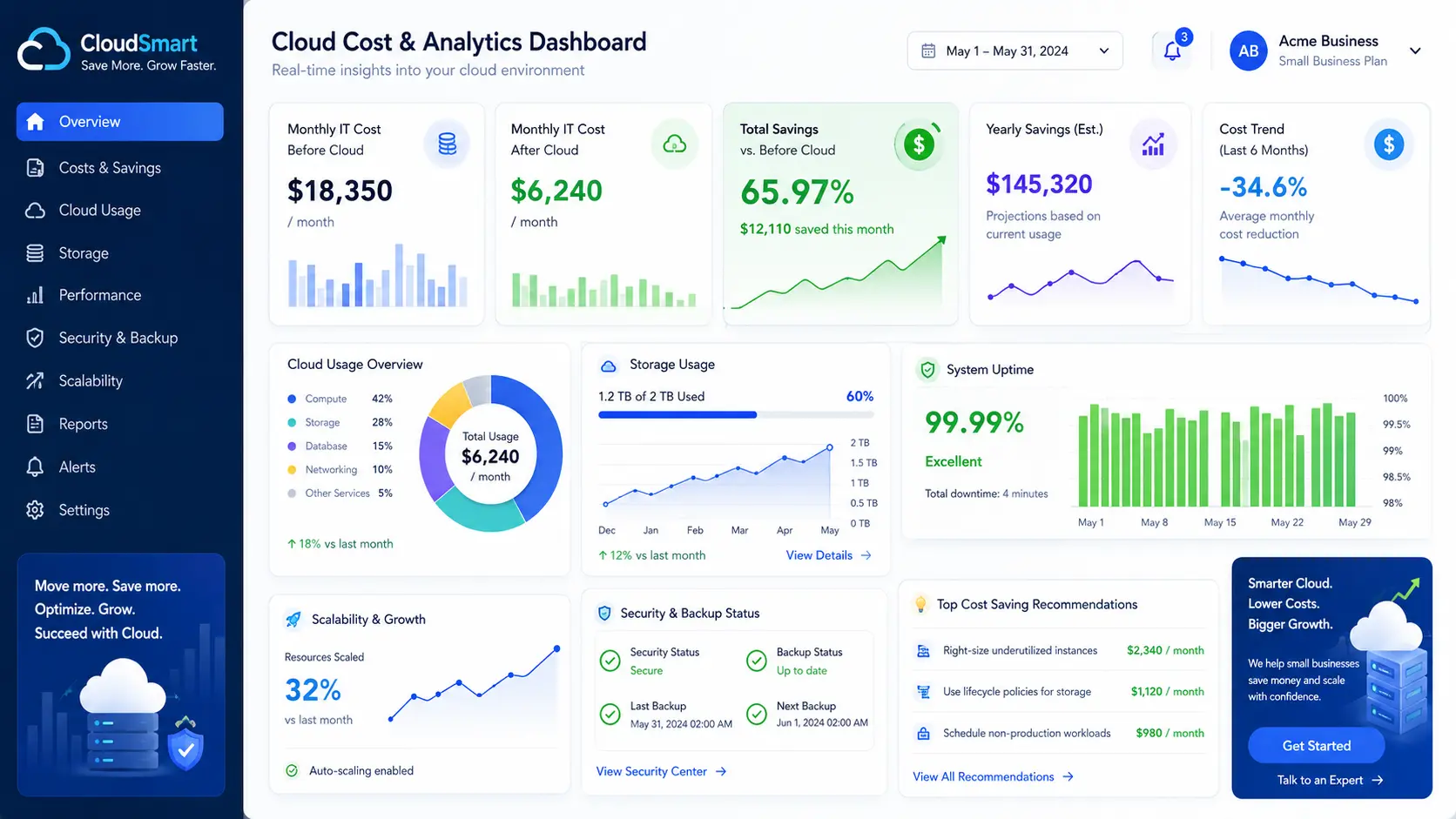
With traditional hosting or fixed infrastructure, businesses may pay for resources they do not fully use. Cloud services can be designed to scale up or down based on demand. This means the business can avoid overpaying for unnecessary capacity.
3. Better Website Performance Can Increase Leads and Sales
A slow website can cost a business real money. Visitors expect websites to load quickly, work on mobile devices, and provide a smooth user experience. If a website takes too long to load, people may leave before they ever read about the company’s services.
Cloud migration can improve website performance through faster hosting, better caching, optimized storage, content delivery networks, and scalable infrastructure. A faster website can improve user experience, increase engagement, and support stronger search engine performance.
4. Cloud Backup and Disaster Recovery Reduce Risk
Data loss can be expensive. A business can lose customer records, website files, sales data, documents, images, emails, or important operational information due to hardware failure, accidental deletion, cyberattacks, or poor backup practices.
Cloud migration gives small businesses better options for backups, disaster recovery, and business continuity. Cloud environments can be configured to store backups securely and restore systems faster if something goes wrong.
5. Cloud Technology Supports Automation and Long-Term Growth
Cloud migration is not only about saving money on hosting. It also creates opportunities for automation. A business can connect cloud systems to customer forms, payment tools, analytics dashboards, email notifications, AI chatbots, CRM tools, and custom software applications.
Automation saves time by reducing repetitive manual work. For example, a website form can store customer information in a database, send an email confirmation, notify the business owner, and organize the lead for future follow-up. This saves time and helps prevent missed opportunities.
Why Small Businesses Should Plan Cloud Migration Carefully
Cloud migration can save money, but only when it is planned correctly. Moving to the cloud without a clear strategy can create unexpected costs, broken features, security issues, or performance problems.
A strong cloud migration plan should include a review of the current website or system, business goals, security needs, storage requirements, traffic patterns, backup strategy, and budget. The goal is not to move everything blindly. The goal is to move the right systems in the right way.
How Cloud Technology Computing Can Help
Cloud Technology Computing provides cloud consulting, cloud migration support, website development, custom software development, AI chatbot integration, SEO, analytics, and managed technology services for small businesses and growing organizations.
Whether your business needs a faster website, better hosting, secure backups, cloud-based applications, automation, or a complete digital transformation strategy, Cloud Technology Computing can help you build a practical roadmap.
Final Thoughts
Cloud migration can help small businesses save money by reducing hardware costs, improving scalability, increasing website performance, strengthening backups, and supporting automation. More importantly, it helps businesses build a flexible technology foundation for the future.
Small businesses do not need to wait until their systems break before modernizing. With the right cloud strategy, they can reduce risk, improve customer experience, and prepare for long-term growth.
If your business is ready to explore cloud migration, website optimization, or custom technology solutions, Cloud Technology Computing can help you take the next step.
0 Comments