Cloud Technology Computing Solution

Cloud Security Services for Small Businesses

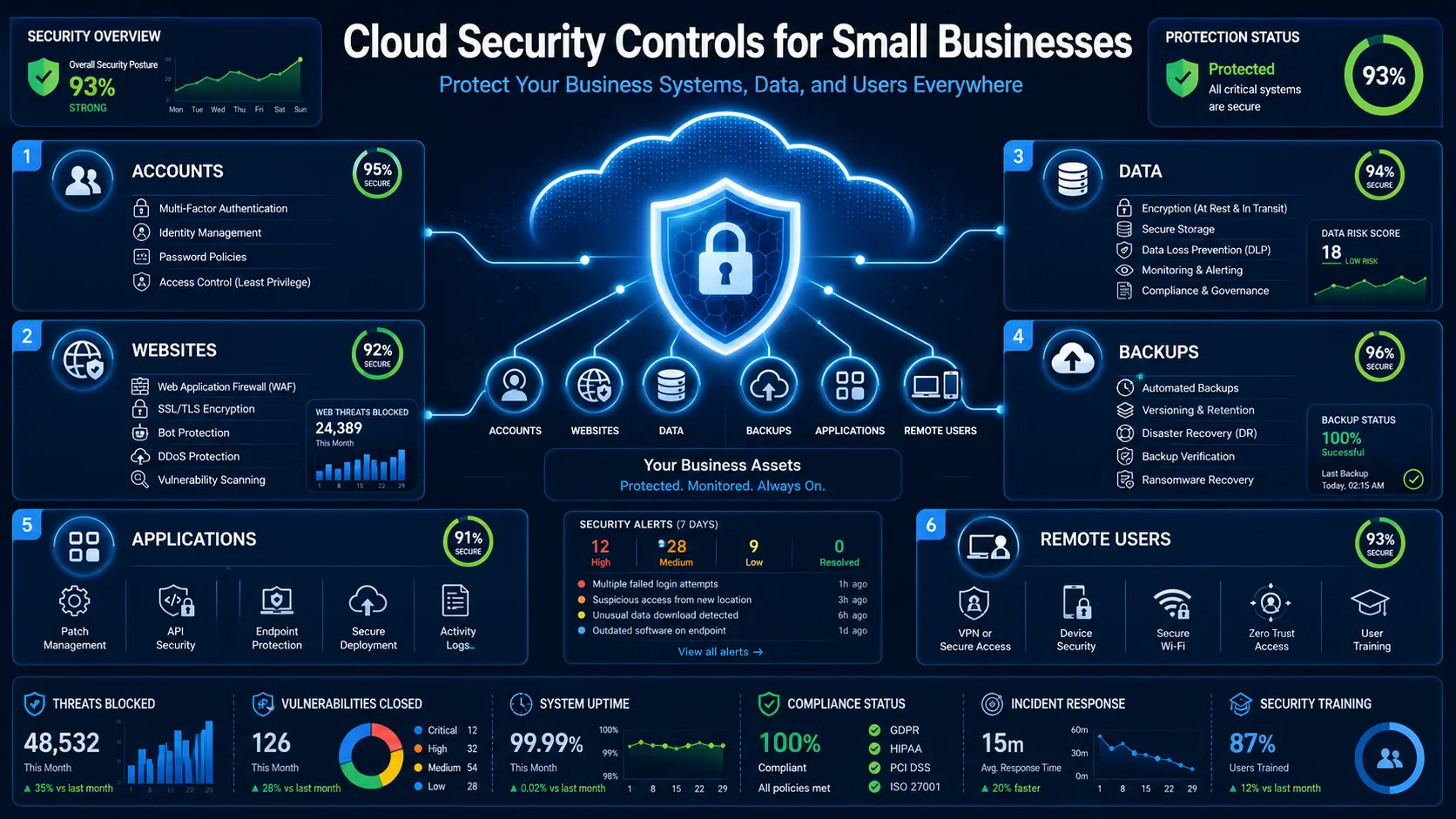
Cloud security for small businesses starts with practical controls: secure access, HTTPS, backups, monitoring, least privilege, update discipline, and clear recovery steps. Cloud Technology Computing helps reduce risk without overwhelming your team.

Cloud security services for small businesses with monitoring backups and secure access
Service overview

What to know about Cloud Security Services for Small Businesses

A successful cloud security services for small businesses engagement starts with business requirements, current systems, users, data, budget, risk, and measurable goals. This discovery work helps prevent unnecessary products, surprise costs, and technology that is difficult to maintain.

Implementation should connect architecture, security, testing, documentation, ownership, and post-launch measurement. Cloud Technology Computing breaks the work into practical phases so small teams can improve the highest-priority issues first and expand when the results justify the next investment.

Business outcomes

What Cloud Security Services for Small Businesses helps you improve

Cloud Security Services for Small Businesses is built for business owners who need practical help, not confusing technical language. This page explains what the service does, why it matters, what outcomes to expect, and how Cloud Technology Computing can support the work from planning through launch and ongoing improvement.

  • Stronger account, website, hosting, and data protection
  • Backup and recovery planning for key business systems
  • Cloud monitoring and security basics that fit small teams
  • Documentation for access, vendors, incidents, and maintenance
Capabilities

What is included in Cloud Security Services for Small Businesses

The exact scope is tailored to the current environment, business priorities, security requirements, and internal resources. A typical engagement may include the following areas.

Phase 1: Review websites, cloud accounts, hosting, users, data, and risks

Define the owner, required inputs, acceptance criteria, security checks, documentation, and measurable result for this stage.

Phase 2: Prioritize quick wins for access, backups, certificates, updates, and monitoring

Define the owner, required inputs, acceptance criteria, security checks, documentation, and measurable result for this stage.

Phase 3: Implement approved security controls and document ownership

Define the owner, required inputs, acceptance criteria, security checks, documentation, and measurable result for this stage.

Phase 4: Review recurring risks and improve the security plan over time

Define the owner, required inputs, acceptance criteria, security checks, documentation, and measurable result for this stage.

Process

How we deliver it

Step 1

Review websites, cloud accounts, hosting, users, data, and risks

Step 2

Prioritize quick wins for access, backups, certificates, updates, and monitoring

Step 3

Implement approved security controls and document ownership

Step 4

Review recurring risks and improve the security plan over time

Planning guide

Planning your cloud security services for small businesses project

Planning begins with an inventory of the systems, users, vendors, data, integrations, service expectations, and risks in scope. The roadmap then separates immediate fixes from longer-term improvements and identifies dependencies before implementation begins.

Every launch should include testing, backup or rollback options, access controls, documentation, monitoring, and a clear handoff. These controls reduce disruption and make future support, optimization, and security reviews easier.

Questions to answer before implementation

  • Which business result should this project improve first?
  • Which users, applications, data, and customer workflows are in scope?
  • What security, availability, recovery, and compliance needs apply?
  • Who will own administration, monitoring, support, and future changes?
  • How will cost, performance, reliability, adoption, or leads be measured after launch?
Best fit

Who this page is built for

Use this page as a buying guide when you are comparing technology options, planning a project, or deciding which service your business should prioritize first.

  • Small businesses that need a clearer technology roadmap before investing more money
  • Business owners who want better uptime, faster pages, stronger security, and lower operating friction
  • Teams that need cloud-connected websites, applications, databases, automations, or customer workflows
  • Growing companies that want a practical partner for planning, implementation, documentation, and support
Project deliverables

What your business can receive

Deliverables are selected according to project scope. They are designed to make decisions, implementation, security, and ongoing ownership easier to understand.

  • Stronger account, website, hosting, and data protection
  • Backup and recovery planning for key business systems
  • Cloud monitoring and security basics that fit small teams
  • Documentation for access, vendors, incidents, and maintenance
Get a clear roadmap

Ready to plan your cloud security services for small businesses project?

Start with a focused consultation to review your goals, current systems, risks, budget, and the next practical step for implementation.

Request a Free Consultation
FAQ

Common questions about Cloud Security Services for Small Businesses

What is cloud security for small businesses?

It is the set of controls that protect cloud-hosted websites, data, applications, accounts, backups, and business workflows.

Do you help with HTTPS and website security?

Yes. We can review HTTPS, headers, forms, access controls, updates, backups, and hosting configuration.

Can this work with managed IT?

Yes. Cloud security is often strongest when paired with managed IT support, monitoring, documentation, and regular reviews.
Cloud Technology Computing

Why work with Cloud Technology Computing

Cloud Technology Computing brings cloud infrastructure, software, databases, websites, mobile apps, analytics, automation, security awareness, and support planning into one engagement. That cross-functional view helps expose dependencies that are easy to miss when each system is handled separately.

Recommendations are explained in practical language and tied to cost, risk, performance, customer experience, and ownership. An engagement can start with a focused assessment and expand into implementation, optimization, documentation, or ongoing support as needed.

Learn more about Cloud Technology Computing or review our case studies to see how cloud, software, SEO, automation, and managed support work together.

Related Solutions

Explore more growth pages

Chatbot

Hey there 👋
How can I help you today?