 For Client Support:


 Blog Details


Businesses evaluating hybrid cloud explained need practical guidance that accounts for security, cost, maintainability, and customer experience. This guide from Cloud Technology Computing explains the decisions and implementation checks that matter most.
What Is Hybrid Cloud?
Hybrid cloud combines private infrastructure with public cloud services in a coordinated architecture. It is useful when some applications or data must remain in a controlled environment while other workloads benefit from cloud flexibility.
Common Business Use Cases
Organizations may retain legacy databases on premises while hosting web applications in a public cloud. Other scenarios include disaster recovery, phased modernization, and workloads with location-specific requirements.
Networking and Identity
Reliable hybrid architecture requires secure connectivity, consistent identity policies, clear DNS design, and monitoring across environments. Complexity increases when teams manage different tools and network boundaries.
Security and Data Governance
Classify data, control access, encrypt sensitive transfers, and document retention rules. Moving data between environments creates additional operational and compliance responsibilities.
Cost and Operations
Include private infrastructure maintenance, connectivity, cloud usage, licensing, and staff expertise in the cost model. Hybrid cloud is not automatically cheaper or simpler than a public-cloud-only approach.
Plan a Phased Deployment
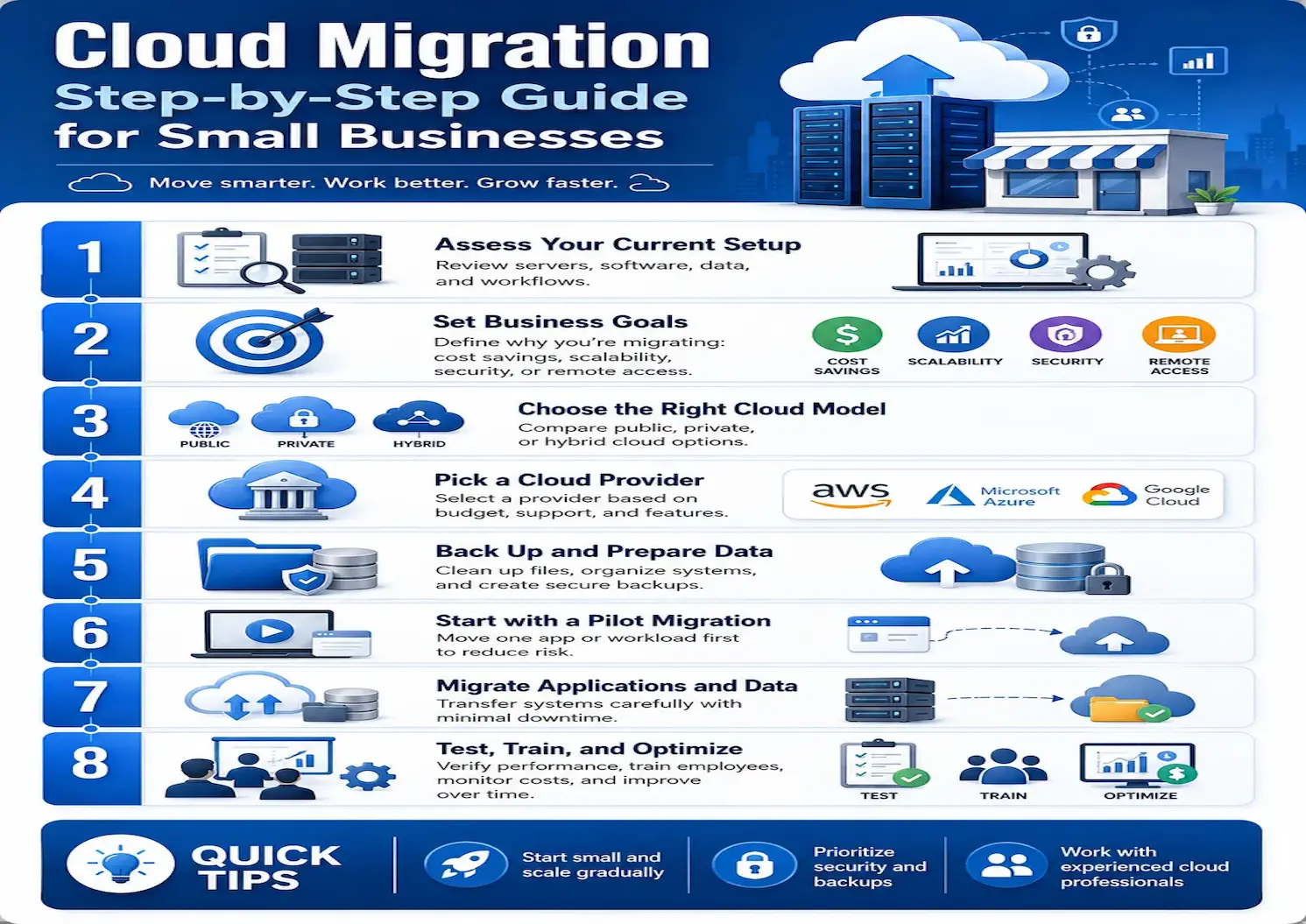
Start with a workload inventory and measurable goals. Pilot a low-risk integration, test recovery and performance, then expand only when operational processes are proven.
Next Steps
Document your current systems, prioritize the highest-impact improvements, and test changes before production deployment. For help planning cloud infrastructure, custom software, or website optimization, contact Cloud Technology Computing.

0 Comments