 For Client Support:


 Blog Details


Cloud Computing for Small Businesses: Benefits, Costs, Security, and How to Get Started
Introduction
Cloud computing is no longer only for large enterprises. Small businesses now use cloud technology to run websites, store data, manage customer information, automate tasks, improve security, and scale faster without buying expensive physical servers.
Whether you run a local service business, online store, startup, consulting company, nonprofit, or growing brand, cloud computing can help you modernize your technology and compete in today’s digital economy.
At Cloud Technology Computing, we help small businesses understand and use cloud computing in a practical way. The goal is not to make technology complicated. The goal is to use cloud services to save time, reduce costs, improve performance, protect data, and help your business grow.
What Is Cloud Computing?
Cloud computing means using internet-based servers, storage, databases, software, and applications instead of relying only on physical computers or local servers. Instead of keeping everything on one machine in one location, your business can access technology resources through secure cloud platforms.
Examples of cloud computing include website hosting, file storage, business email, online databases, customer management tools, mobile apps, AI chatbots, backup systems, and software-as-a-service platforms.
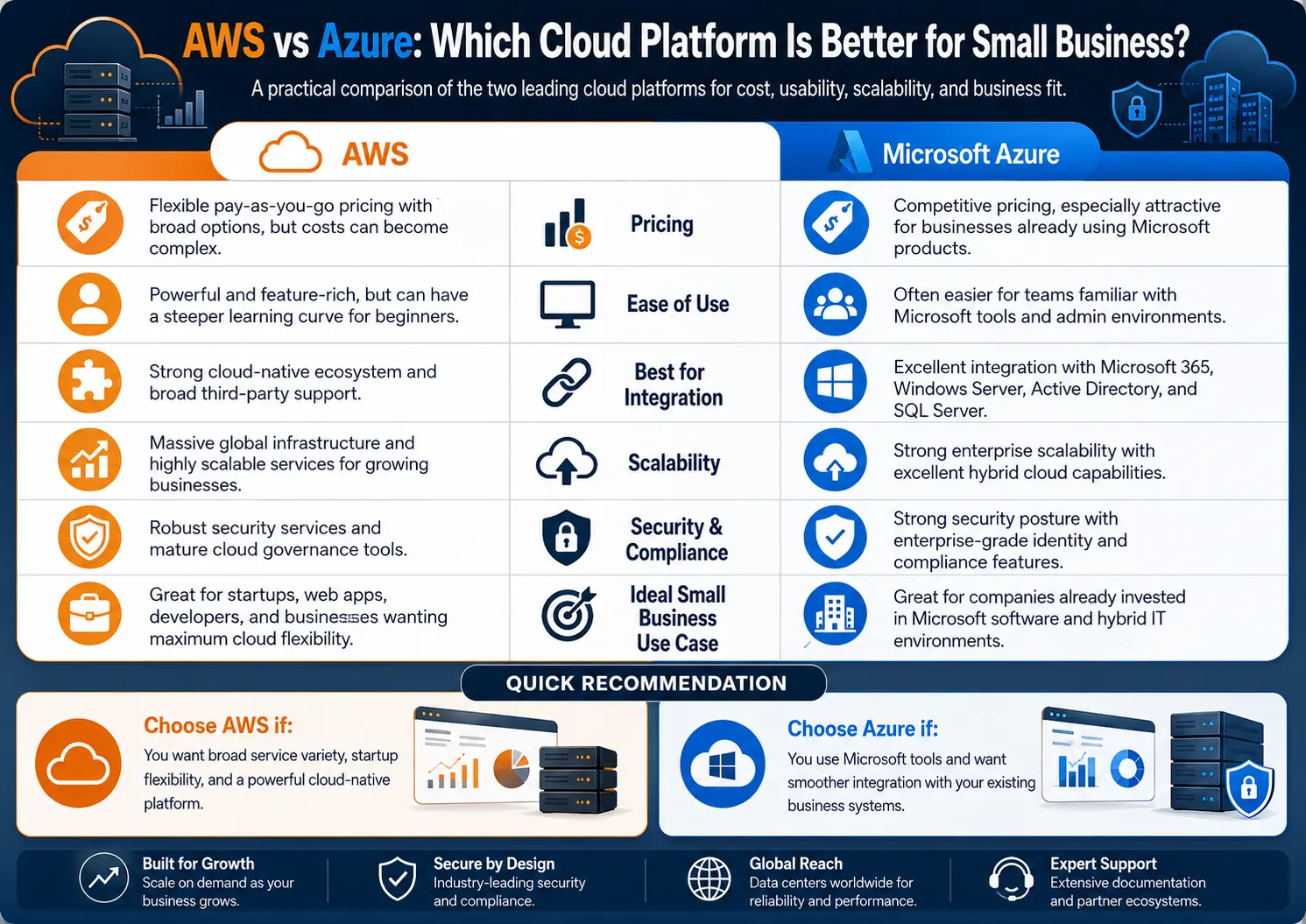
Popular cloud platforms include Amazon Web Services, Microsoft Azure, Google Cloud, IBM Cloud, and managed cloud hosting providers. The right cloud solution depends on your business size, budget, security needs, website traffic, and long-term goals.
Why Small Businesses Are Moving to the Cloud
Small businesses are moving to cloud computing because traditional technology can be expensive, limited, and difficult to manage. Old hosting plans, slow websites, manual file storage, disconnected tools, and weak backup systems can hold a business back.
Cloud services give small businesses access to flexible technology without requiring large upfront investments. A business can start small and expand as more customers, traffic, data, or applications are needed.
1. Cloud Computing Can Reduce Technology Costs
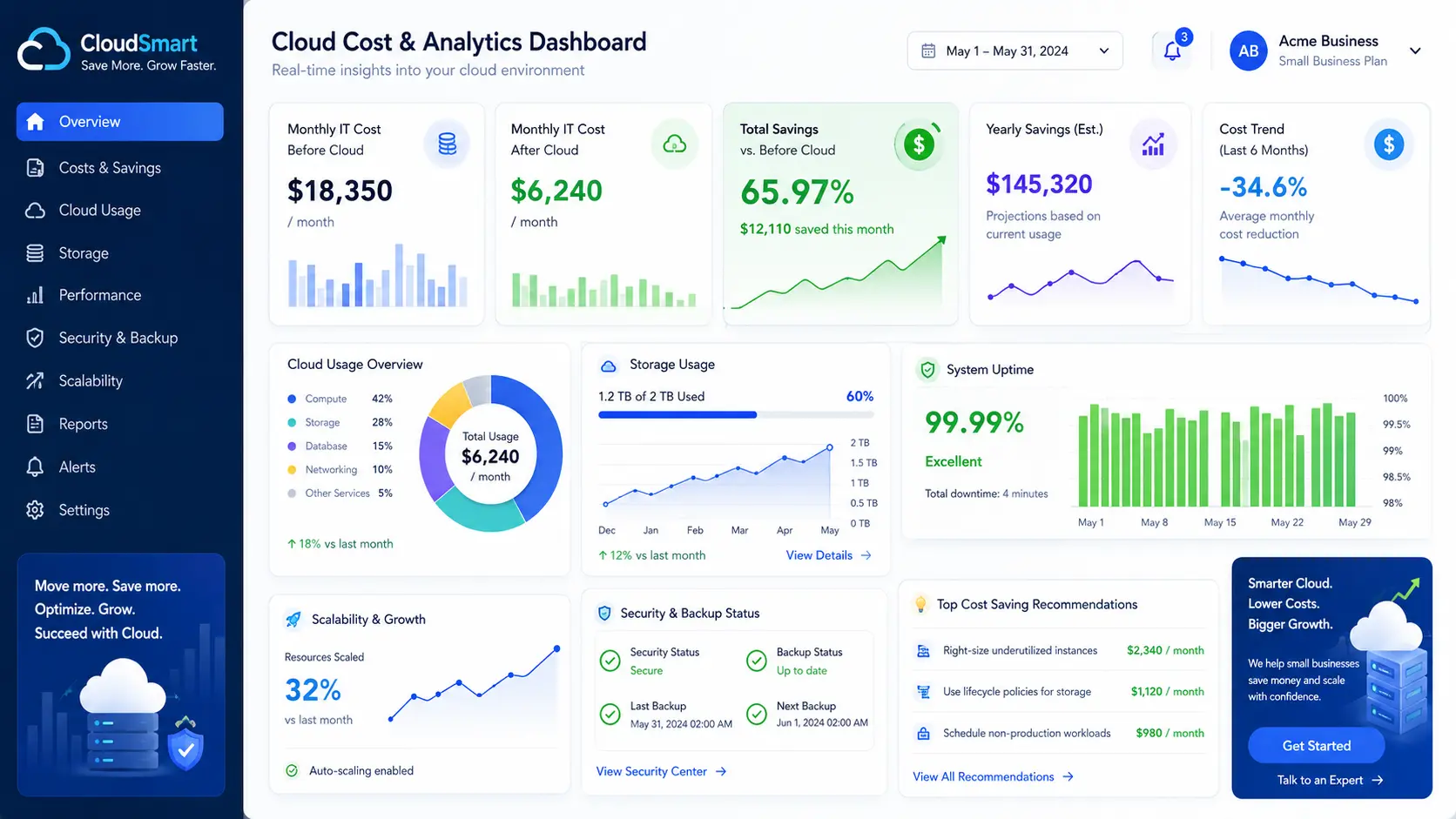
One of the biggest benefits of cloud computing for small businesses is cost control. Traditional IT systems often require hardware, maintenance, upgrades, storage devices, backup systems, and technical support. These costs can add up quickly.
With cloud computing, businesses can use resources based on demand. Instead of buying expensive infrastructure upfront, a business can pay for the services it needs and adjust over time.
2. Cloud Services Improve Website Performance
Your website is often the first impression customers have of your business. If your website loads slowly, breaks on mobile devices, or feels outdated, visitors may leave before contacting you.
Cloud hosting can improve website performance by using faster servers, better caching, scalable resources, content delivery networks, and optimized infrastructure. A faster website can help improve user experience, increase engagement, and support stronger SEO performance.
3. Cloud Computing Supports Better Security
Security is one of the most important reasons to modernize your technology. Small businesses collect customer names, emails, phone numbers, payment details, service requests, files, and business information. That data needs protection.
Cloud security can include HTTPS, secure databases, backups, access control, multi-factor authentication, firewalls, monitoring, encryption, secure APIs, and disaster recovery planning.
4. Cloud Migration Helps Businesses Scale
Cloud migration is the process of moving websites, databases, files, applications, or business systems from outdated hosting or local infrastructure into a modern cloud environment.
This helps businesses scale more easily. If your company grows, adds more users, receives more website traffic, or needs new tools, cloud infrastructure can expand with you.
5. Cloud Technology Makes Remote Work Easier
Many small businesses now work with remote employees, contractors, vendors, and clients. Cloud-based systems make it easier to access files, collaborate on projects, manage communication, and keep business operations moving from anywhere.
6. Cloud Computing Supports AI Automation
Cloud technology and artificial intelligence work well together. AI chatbots, automation tools, analytics systems, and smart applications often depend on cloud infrastructure.
For small businesses, AI automation can help answer customer questions, collect leads, recommend services, organize information, send notifications, and reduce repetitive work.
7. Cloud Backups Protect Business Data
Every business needs a backup plan. Websites can break. Files can be deleted. Hardware can fail. Cyberattacks can happen. Employees can make mistakes. Without backups, recovering from these problems can be expensive and stressful.
Cloud backup solutions help protect important business data by storing copies securely and making recovery easier.
8. Cloud Analytics Help Businesses Make Better Decisions
Cloud-based analytics can help small businesses understand website traffic, customer behavior, form submissions, service interest, marketing performance, and sales activity.
Instead of guessing what is working, businesses can use data to make smarter decisions.
Common Cloud Services Small Businesses Use
- Cloud website hosting
- Cloud data storage
- Cloud backup and disaster recovery
- Business email and collaboration tools
- Customer relationship management systems
- Cloud databases
- AI chatbot platforms
- Custom web applications
- Mobile app backends
- Analytics dashboards
- Payment and booking systems
- Managed cloud services
How Much Does Cloud Computing Cost for a Small Business?
The cost of cloud computing depends on what your business needs. A simple website hosting setup may cost much less than a custom cloud application with databases, dashboards, backups, and automation.
The best cloud strategy is not always the most expensive one. For many small businesses, the best approach is to start with the most important improvements first, then scale over time.
Signs Your Business May Need Cloud Services
- Your website loads slowly
- You are using outdated hosting
- You do not have reliable backups
- Your business tools are disconnected
- You manually repeat the same tasks every day
- You need better security for customer data
- You want to add an AI chatbot
- You want to build a customer portal or dashboard
- You need better analytics and reporting
- You want your website or app to scale as your business grows
How to Get Started With Cloud Computing
The best way to start is with a technology review. Look at your current website, hosting, data storage, security, backups, forms, business tools, and customer workflow.
From there, identify the biggest problems first. For some businesses, the first step is faster website hosting. For others, it may be secure backups, database integration, AI automation, cloud migration, or custom software development.
How Cloud Technology Computing Can Help
Cloud Technology Computing helps small businesses use cloud computing, custom software development, AI automation, web development, SEO, mobile apps, and managed technology services to build stronger digital systems.
We can help with cloud hosting, cloud migration, website optimization, secure forms, database-driven websites, AI chatbot integration, business automation, mobile app development, analytics dashboards, and custom web applications.
Final Thoughts
Cloud computing gives small businesses access to powerful technology that can improve performance, reduce costs, strengthen security, support automation, and prepare the business for growth.
The cloud is not just about servers. It is about building a better foundation for your website, customers, data, applications, and future digital tools.
If your business is ready to improve its website, move to the cloud, automate workflows, protect data, or build custom software, Cloud Technology Computing can help you take the next step.
0 Comments