Data inventory and classification
Identify important datasets, owners, locations, sensitivity, business use, regulatory needs, and approved sharing.
 For Client Support:
Cloud data security protects customer information, business records, website data, databases, files, and backups stored or processed in cloud systems. We help businesses reduce risk with better access controls, hosting practices, backups, monitoring, and recovery planning.

Cloud Data Security Services is designed for organizations storing customer, operational, financial, employee, analytics, or application data in cloud systems. The work addresses data can be exposed or lost when ownership, classification, permissions, encryption, retention, backup, sharing, and monitoring are not managed as one lifecycle. Instead of starting with a product list, we begin with business priorities, current dependencies, security requirements, budget, and the people who will operate the solution after launch.
A complete engagement can cover data discovery, classification, access, encryption, key management, storage, transfer, database security, backup, retention, monitoring, privacy, and recovery. Depending on the requirements, the solution may use cloud databases, object storage, encryption services, identity controls, key management, backup, logging, data-loss prevention, and secure transfer tools. The objective is clear control over who can access business data, where copies exist, how long they remain, and how the company can recover them. Planning also accounts for public storage, excessive database permissions, unmanaged exports, insecure backups, lost encryption keys, privacy violations, and data that cannot be restored accurately, because a successful implementation must remain reliable and understandable after the initial project is complete.
Cloud Data Security Services is built for business owners who need practical help, not confusing technical language. This page explains what the service does, why it matters, what outcomes to expect, and how Cloud Technology Computing can support the work from planning through launch and ongoing improvement.
The exact scope is tailored to the current environment, business priorities, security requirements, and internal resources. A typical engagement may include the following areas.
Identify important datasets, owners, locations, sensitivity, business use, regulatory needs, and approved sharing.
Apply least privilege, role-based access, MFA, service identities, privileged-access review, and separation of duties.
Protect data at rest and in transit while defining key ownership, rotation, backup, and recovery.
Review network exposure, authentication, audit logs, configuration, patching, exports, and public-access controls.
Define recovery points, retention, restore testing, isolated copies, deletion, and legal or operational requirements.
Track high-risk access, unusual transfer, configuration changes, retention exceptions, and privacy-related responsibilities.
Identify where sensitive business and customer data lives
Review access, storage, backups, forms, databases, and hosting
Improve controls, monitoring, encryption guidance, and recovery steps
Document ongoing responsibilities and future improvements
Before implementation, Cloud Technology Computing documents the current environment, business-critical workflows, data locations, users, vendors, performance expectations, and recovery needs. This discovery phase helps separate urgent risk reduction from improvements that can be delivered later, creating a roadmap that fits the company rather than forcing the company into a generic architecture.
During delivery, each change should have an owner, test method, acceptance criteria, backup or rollback option, and documented next step. After launch, we review security, performance, reliability, usage, cost, and support responsibilities. That operating discipline turns cloud data security from a one-time technical purchase into a measurable business capability.
Use this page as a buying guide when you are comparing technology options, planning a project, or deciding which service your business should prioritize first.
Deliverables are selected according to project scope. They are designed to make decisions, implementation, security, and ongoing ownership easier to understand.
Start with a focused consultation to review your goals, current systems, risks, budget, and the next practical step for implementation.
It is the protection of data stored, processed, or transmitted through cloud services, including files, databases, backups, and app data.
Customer forms, admin accounts, databases, payment workflows, backups, email access, and website hosting should be reviewed early.
Yes. Backups and recovery plans are essential because security also means being able to restore operations after mistakes, outages, or incidents.
Cloud Technology Computing combines cloud architecture, application development, database work, security, analytics, automation, and technical support. That cross-functional perspective matters because cloud data security usually touches more than one system. Recommendations are explained in plain language and tied to business outcomes, implementation effort, risk, and ongoing ownership.
The goal is not to add the most technology. The goal is to create a secure, maintainable solution that the business can understand, measure, and improve. Engagements can begin with an assessment or focused project and expand into implementation, optimization, documentation, and managed support when needed.
Learn more about Cloud Technology Computing or review our case studies to see how cloud, software, SEO, automation, and managed support work together.
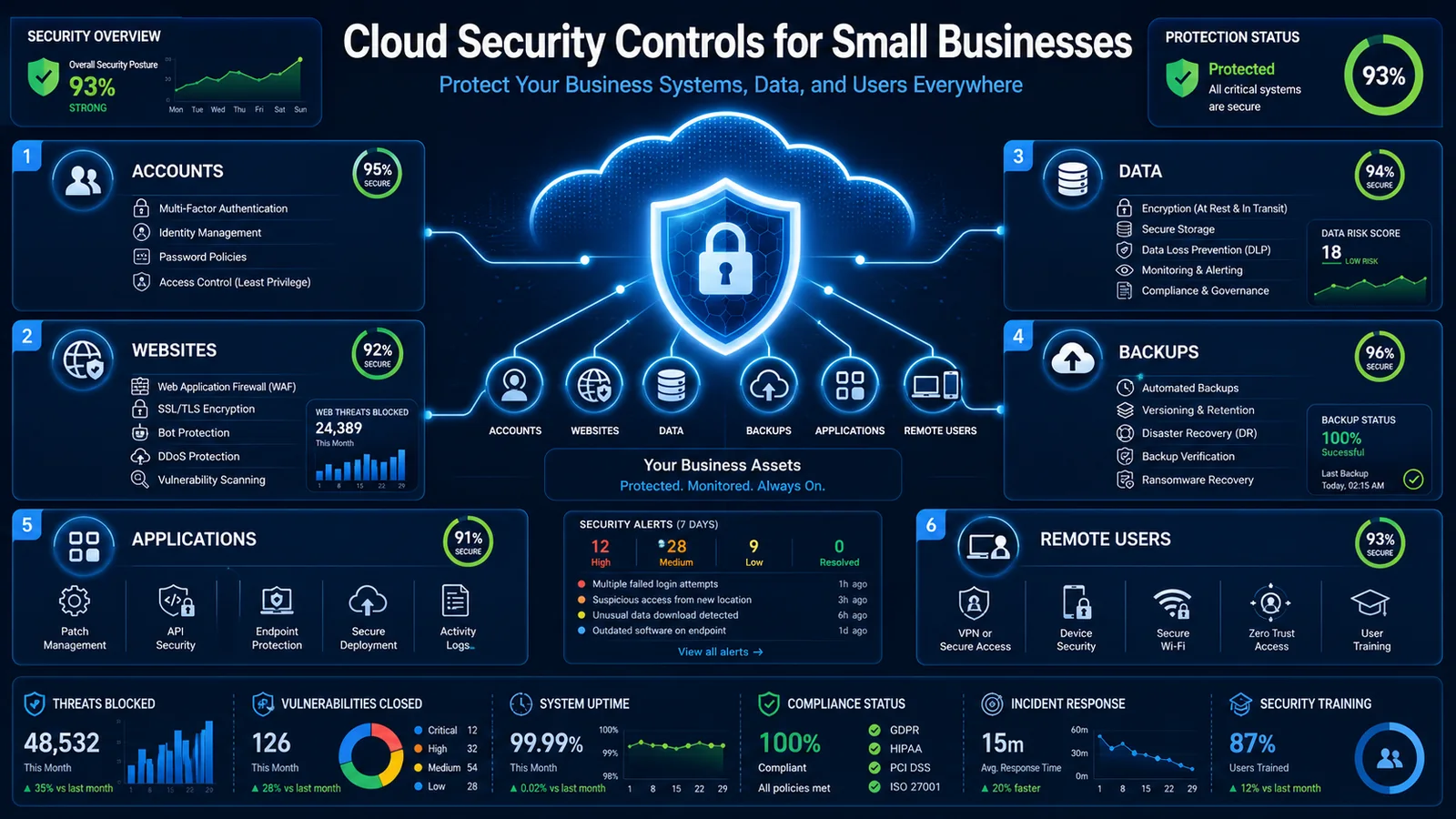
Protect cloud apps, servers, data, and users with cloud security services covering monitoring, access control, backups, compliance basics, and recovery.

Design cloud infrastructure services for servers, storage, networks, databases, monitoring, backups, security, scalable business apps, and long-term growth.

Deploy cloud server services for business websites, databases, apps, backups, monitoring, security, scalable hosting support, and easier maintenance today.

Get managed cloud services for hosting, monitoring, updates, backups, cost optimization, security, ongoing technical support, uptime, growth, and peace of mind.
Plan, migrate, host, and optimize with AWS cloud services including servers, storage, security, backups, monitoring, and cost control for business growth.
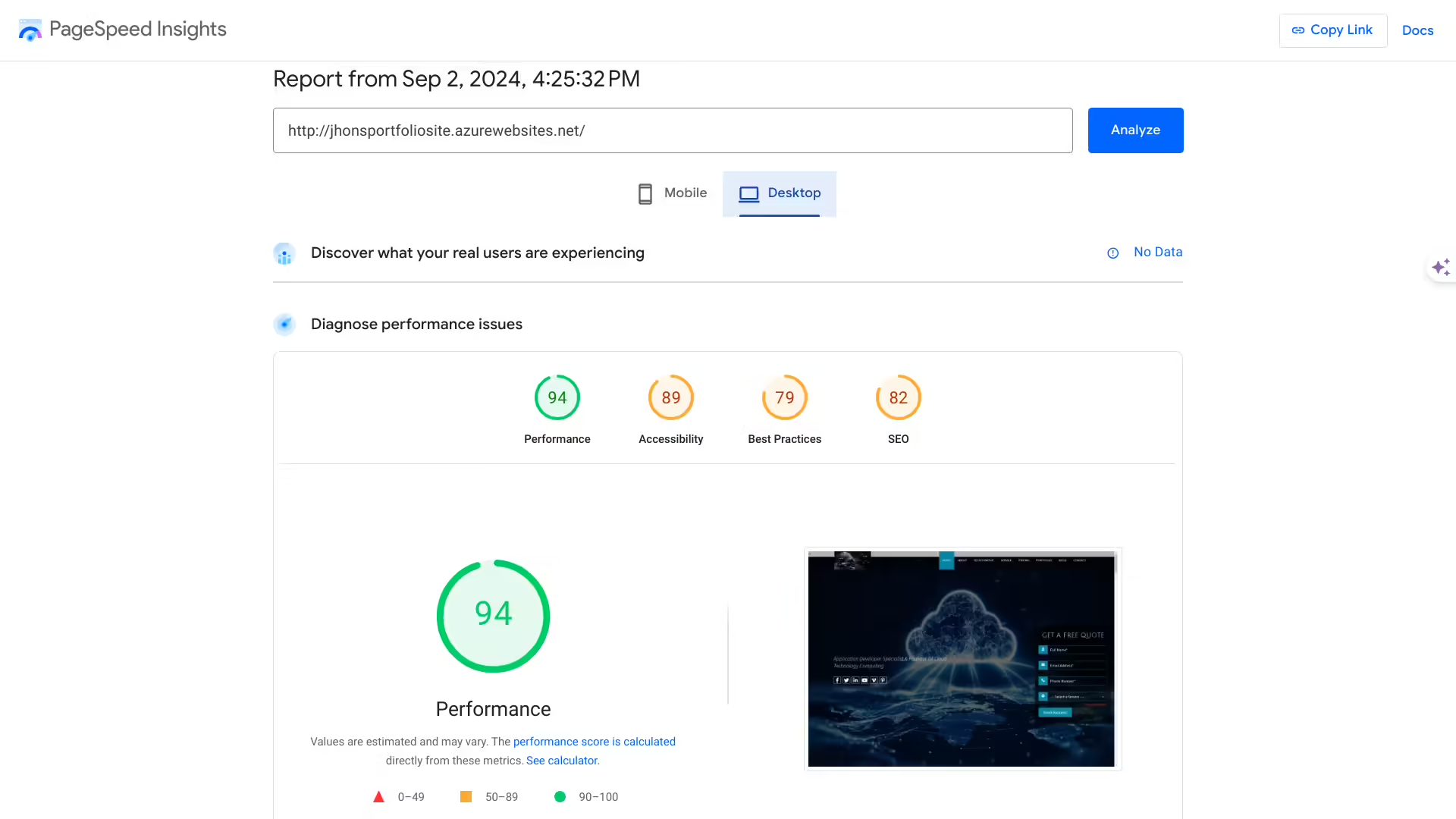
Modernize with Microsoft Azure cloud services for hosting, migration, security, backups, databases, automation, and hybrid cloud planning support today.