 For Client Support:


 Blog Details
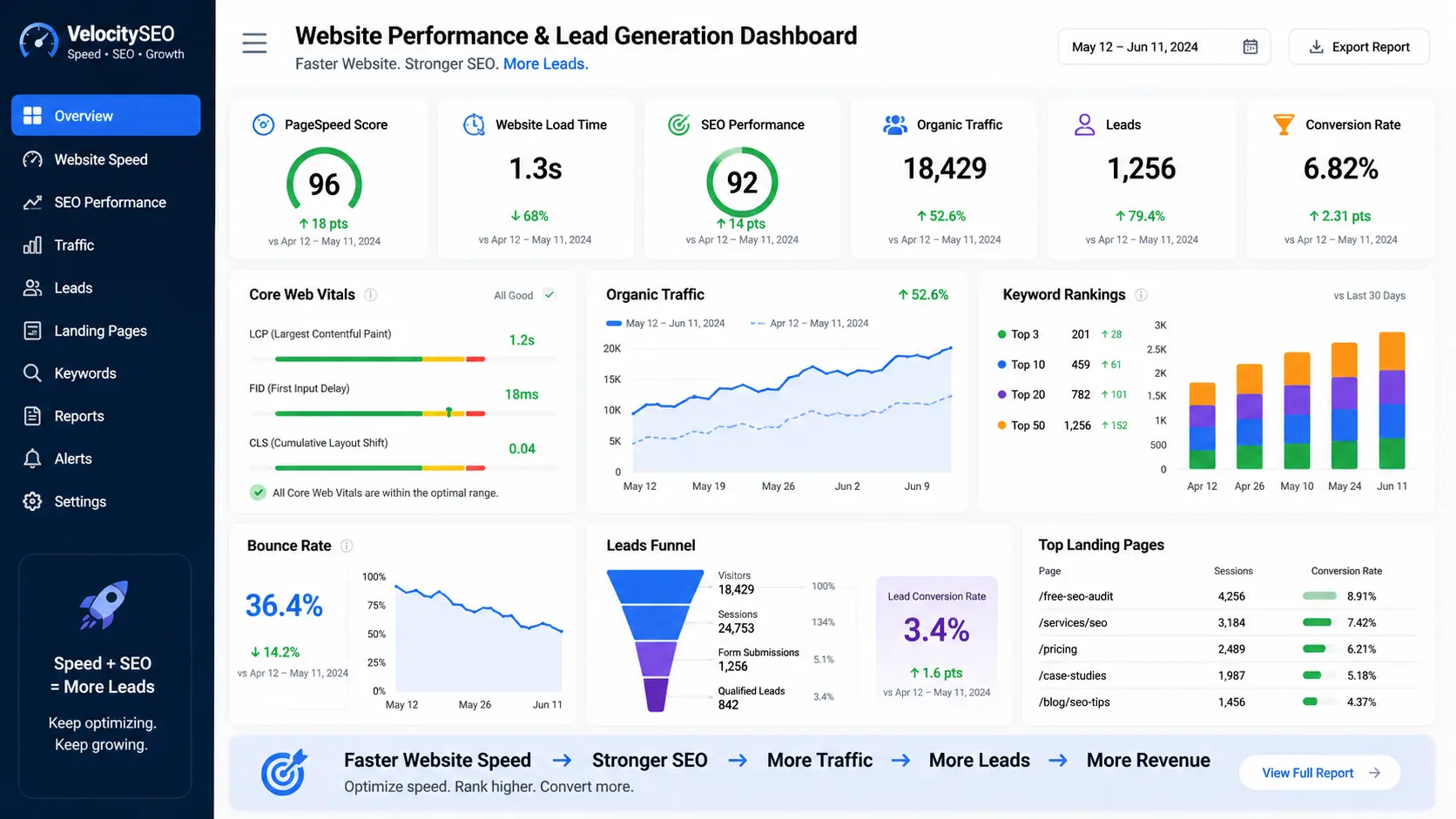

Why Website Speed Matters for SEO and Lead Generation
A slow website can cost your business customers. Visitors expect pages to load quickly, especially on mobile devices. If your website takes too long to load, people may leave before they contact you.
Why Website Speed Matters
Your website is often the first impression of your business. A fast website feels professional, modern, and trustworthy. A slow website creates frustration.
Speed affects search rankings, user experience, bounce rate, contact form submissions, phone calls, sales, ad performance, and brand trust.
Website Speed and SEO
Search engines want to send users to helpful, usable pages. A slow website can create a poor experience, especially on mobile.
Website Speed and Lead Generation
Traffic does not matter if visitors leave before taking action. A fast website helps users read service pages, open contact forms, click phone numbers, view pricing, use chatbots, and book consultations.
Common Causes of Slow Websites
- Large images
- Too many scripts
- Unoptimized CSS
- Heavy sliders
- Poor hosting
- No caching
- Large videos
- Render-blocking JavaScript
- Uncompressed files
How to Improve Website Speed
Compress Images
Use WebP format and compress large files before uploading.
Use Lazy Loading
Lazy loading delays below-the-fold images until the user scrolls.
Minify CSS and JavaScript
Minification reduces file size and improves page load time.
Remove Unused Scripts
If a page does not need a slider, animation library, or extra script, remove it.
Use Browser Caching
Caching stores static files so returning visitors do not have to download everything again.
Use Better Hosting
Cloud hosting or optimized managed hosting can improve website performance.
Final Thoughts
Website speed is not just a technical issue. It affects SEO, user experience, trust, and lead generation. A faster website can help small businesses get more value from every visitor.
Want a faster website that generates more leads? Contact Cloud Technology Computing for a website speed and SEO audit.

0 Comments