 For Client Support:


 Blog Details
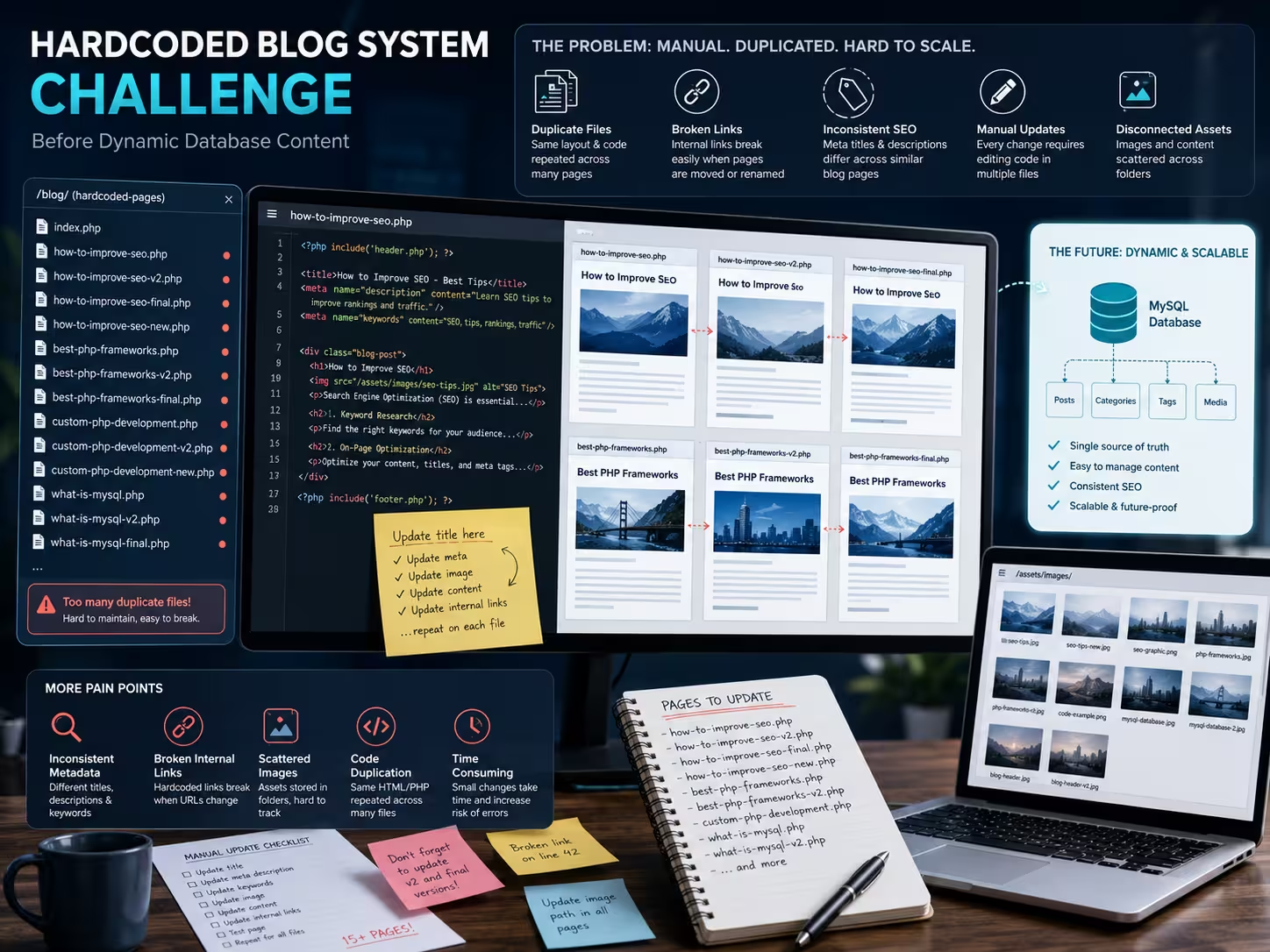

Custom PHP and MySQL development is useful when a business website must do more than display pages. PHP handles application logic on the server, while MySQL stores structured information such as users, blog posts, service records, form submissions, products, comments, project data, and settings.
A page builder can be effective for a standard brochure site. Custom development becomes valuable when the business needs unique workflows, database-driven content, integrations, performance control, or ownership of how the system works.
What Can PHP and MySQL Build?
- Dynamic service pages, blogs, case studies, and project portfolios.
- Lead forms that validate data, store submissions, and trigger notifications.
- Customer, employee, or vendor portals with secure authentication.
- Admin dashboards for managing content and operational records.
- Product catalogs, quote tools, subscriptions, and payment integrations.
- Reporting dashboards connected to business data.
- REST APIs and integrations with cloud services, CRMs, and automation tools.
- Search, pagination, comments, tags, categories, and analytics features.
When Custom Development Is Better Than a Template
The workflow is unique
If the business process cannot be expressed cleanly with standard plugins, custom code can model the exact data and steps. That may reduce manual work and avoid forcing employees into an awkward tool.
The site has many related content types
A growing site may need blog posts, authors, categories, affiliate links, case studies, services, testimonials, comments, and views. A well-designed relational database keeps those records connected and makes one reusable template serve many pages.
Performance and control matter
Custom code can avoid loading features the site does not use. It also gives the development team control over caching, queries, assets, routing, and deployment. That control is valuable only when the code is maintained responsibly.
The business needs integrations
PHP can connect forms and databases to email, payments, cloud storage, analytics, artificial intelligence, and third-party APIs. Integration work should include error handling, logging, secure secrets, and recovery behavior.
A Good PHP/MySQL Architecture
A maintainable application separates configuration, database access, business logic, templates, and public assets. Repeated layout elements such as navigation and footers should be reusable. Database queries should be centralized or organized so security and performance improvements can be applied consistently.
Cloud Technology Computing provides custom PHP and MySQL website development for dynamic blogs, case studies, forms, service pages, dashboards, and business applications.
Security Requirements
- Use prepared statements for database queries.
- Validate and normalize input on the server.
- Escape output according to its HTML, URL, JavaScript, or JSON context.
- Hash passwords with modern password functions instead of storing plain text.
- Protect forms against cross-site request forgery when they change data.
- Restrict file uploads by type, size, storage location, and execution permissions.
- Keep database credentials outside public files and limit database privileges.
- Log application errors privately without showing sensitive details to visitors.
SEO Advantages of a Database-Driven Website
A custom system can store a unique title, meta description, slug, canonical URL, social image, publish date, author, category, and image ALT text for every page. Clean URLs and reusable templates make it easier to scale content without copying entire PHP files.
SEO still depends on content quality and site structure. The database should support descriptive internal links, related articles, breadcrumbs, XML sitemaps, and structured data rather than producing thousands of thin pages.
Database Design Matters
Tables should represent real entities and relationships. For example, posts can belong to categories and connect to many tags. Affiliate links can be assigned to selected posts through a junction table. Foreign keys help preserve relationships, while indexes help common queries run efficiently.
Migrating a Hardcoded Site to a Dynamic System
- Inventory existing pages, content fields, URLs, images, and metadata.
- Design tables for the reusable content types and relationships.
- Build one secure template that loads records by slug.
- Import and clean existing content while preserving important URLs.
- Add redirects for any changed addresses.
- Test forms, pagination, search, metadata, mobile layout, and error handling.
- Update the sitemap and monitor indexing after launch.
Maintenance After Launch
Custom software is not a one-time file upload. Plan for backups, dependency updates, security reviews, database optimization, error monitoring, browser testing, and documented deployment. Version control and a staging environment reduce the risk of breaking the live site.
Frequently Asked Questions
Is PHP still suitable for modern business websites?
Yes. PHP remains widely supported and is effective for server-rendered websites, APIs, content systems, portals, and business applications when modern security and architecture practices are used.
Can PHP connect to cloud services and AI?
Yes. PHP can call REST APIs, process webhooks, store results, and connect business workflows to cloud storage, email, payments, analytics, and AI services.
Should every business use custom code?
No. A standard site may be faster and less expensive with a well-supported platform. Custom development is most valuable when the business has requirements that create a clear operational, performance, ownership, or integration benefit.
Build a Dynamic Business Website
Cloud Technology Computing can convert hardcoded pages into a secure database-driven platform or build a custom PHP/MySQL application around your business workflow.
Book a free consultation with Cloud Technology Computing to discuss your goals, current systems, and next best step.
0 Comments